

Rated 4.7 out of 5 stars
4.7 / 5


726,000+ customers
Free 60-Day Returns
1-Year Warranty
726,000+ customers
Free 60-Day Returns
1-Year Warranty
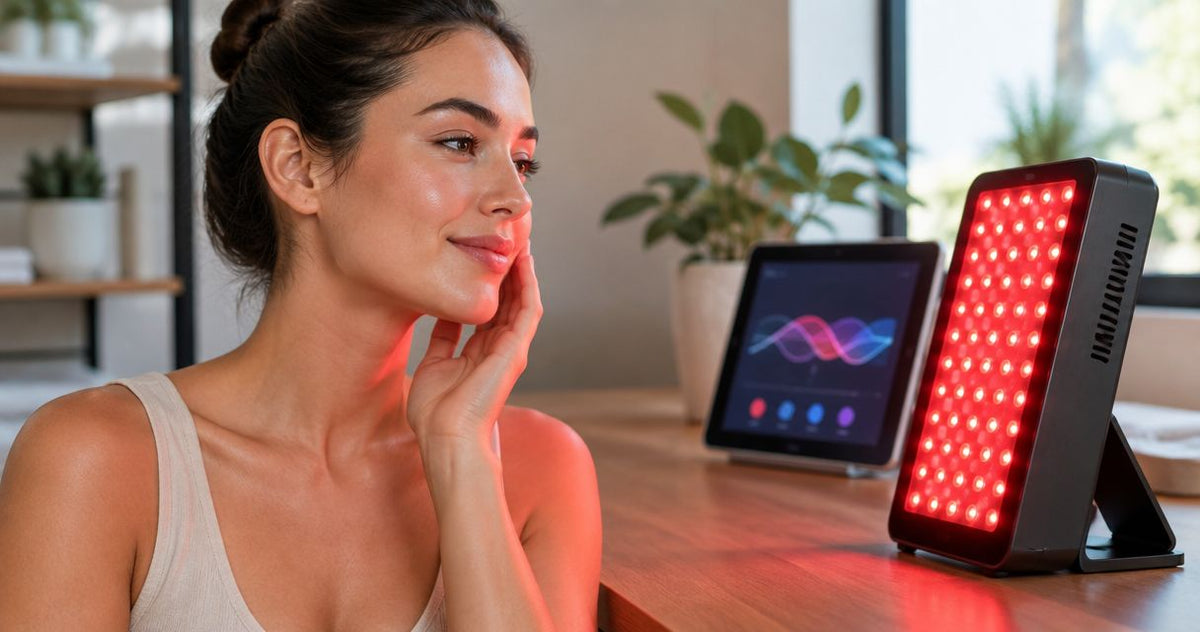
Most skin types tolerate red light therapy 3 to 5 times a week, but sensitive, acne-prone, and mature skin each need their own starting frequency, and getting it wrong shows up fast as redness or a routine that quietly dies after two weeks. Sensitive skin does best starting at 2-3 sessions weekly, acne-prone skin can often go daily once red and blue light are combined, and mature or thicker skin tolerates 5-6 sessions a week for collagen-focused results. The variable that actually matters isn't your age bracket or your tone — it's how your skin reacts in the first two weeks of consistent use.
Red light therapy frequency by skin type gets ignored in most device manuals, which default to one blanket schedule for every buyer regardless of what their skin can actually handle. That's why some people quit after a week of flushed cheeks, and others run a device daily for a month and see nothing.
Skin type changes how fast cells respond to red and near-infrared wavelengths, and it changes how much heat and light exposure your skin barrier can absorb per session before it protests. Someone with rosacea-prone skin running daily sessions is treating their face like it's oily and thick — a mismatch that shows up as flushing, not glow. A 4-in-1 Radiant Renewal Skincare Wand works the same way at 2 sessions a week or 6 — the device isn't the variable in 2026, the schedule you run it on is.
Use this as your starting point, then adjust based on how skin looks 24 hours after a session — calmer and slightly plumper is on target, redness that lingers past an hour means you've gone too far too fast.
| Skin type | Starting frequency | Weekly ceiling | What to run |
|---|---|---|---|
| Sensitive / rosacea-prone | 2-3x/week | 3-4x/week | Red light only, shorter sessions |
| Normal | 3-4x/week | 5x/week | Red + near-infrared |
| Oily / combination | 4x/week | 5-6x/week | Red + blue light |
| Acne-prone | 4-5x/week | Daily | Blue + red light combined |
| Mature / thicker skin | 5x/week | 6x/week | Red + near-infrared, longer sessions |
The verdict: match frequency to how your skin recovers, not to how much time you have in the morning — pushing past your ceiling wastes sessions instead of adding benefit.
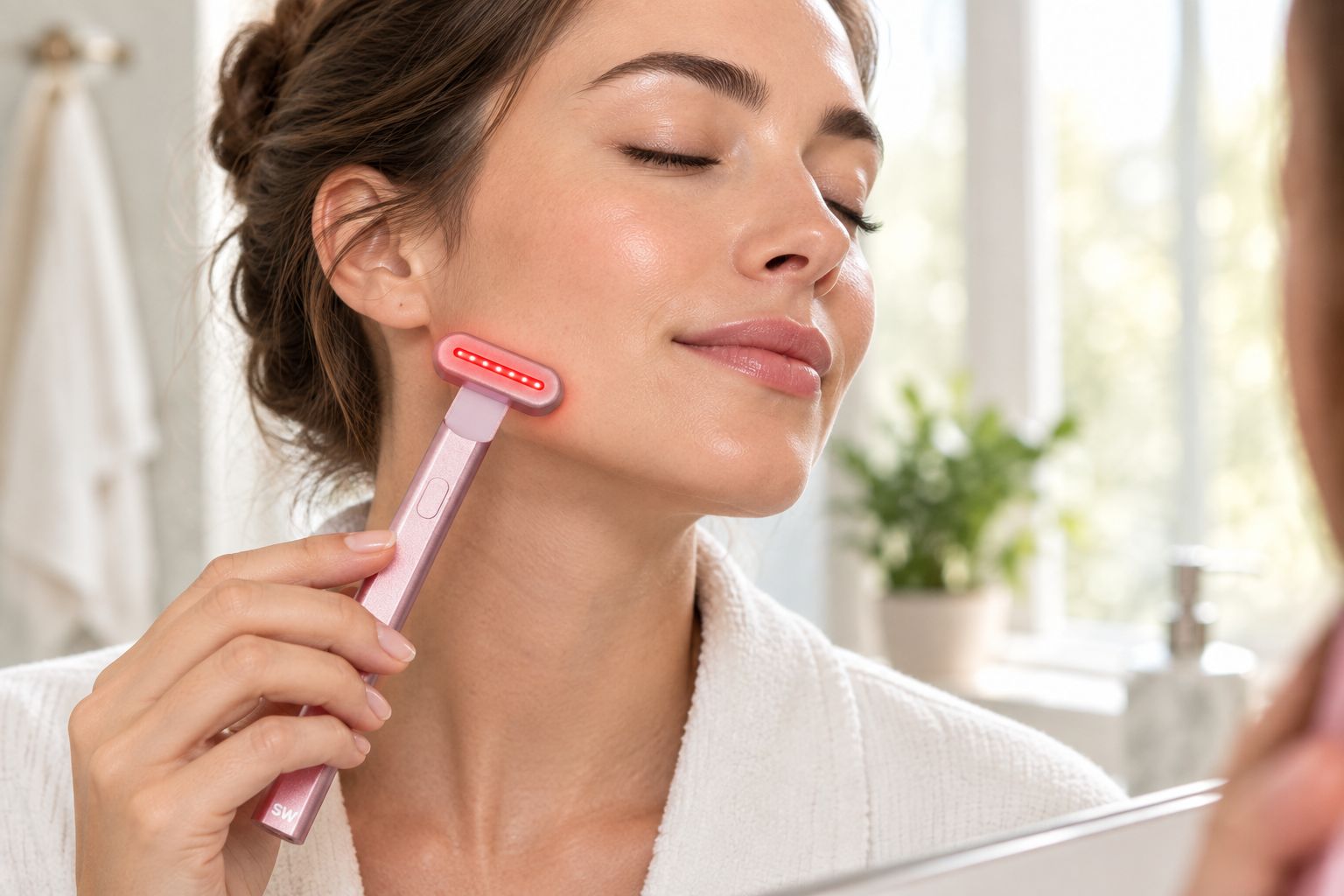
Sensitive and rosacea-prone skin should start at 2-3 sessions a week, red light only, and hold that pace for two full weeks before adding a session. The pro: fewer sessions means lower odds of triggering flushing or heat sensitivity that undoes any calming benefit. The con: results build slower than for other skin types, so patience matters more here than device power. Best for: reactive skin that flushes easily with heat, steam, or exfoliating acids. Verdict: start low, add slowly.
Active breakouts respond to more frequent, lower-heat exposure — acne-prone skin can go up to daily when red light is paired with blue light, since blue light targets acne-causing bacteria while red light calms the resulting inflammation. The tradeoff: daily use only works if the skin isn't also sensitized by benzoyl peroxide or high-strength acids in the same routine. Best for: active breakouts and post-inflammatory redness. Verdict: daily is fine, but not layered under harsh actives the same day.
Thicker, less reactive skin tolerates 5-6 sessions a week and gets the most from combined red and near-infrared light, since near-infrared penetrates deeper toward the dermis where collagen remodeling happens. The downside: thicker skin can also mask early signs of overuse, so dryness or tightness can creep in before it's obvious. Best for: skin in the 40s and up focused on firmness and fine lines. Verdict: near-daily use, watch for tightness as the overuse signal instead of redness.
Oily and combination skin sits in the middle at 4-6 sessions a week, tolerating more frequency than sensitive skin but not needing the daily pace acne-prone skin sometimes runs. The catch: oily skin can mistake surface shine for irritation and cut sessions short when the skin is actually fine. Best for: T-zone shine paired with drier cheeks. Verdict: mid-range frequency, adjust up if skin stays calm after two weeks.
Normal skin is the widest range — 3-5 sessions a week — because there's no barrier issue or active breakout forcing a ceiling in either direction. The risk with normal skin specifically is assuming "normal" means no adjustment is needed at all, which leads to inconsistent use rather than overuse. Best for: maintenance routines without an active skin concern driving frequency. Verdict: pick a number in the range and stay consistent.
“If redness from a session lasts more than an hour, the fix is fewer sessions per week, not a shorter one.”
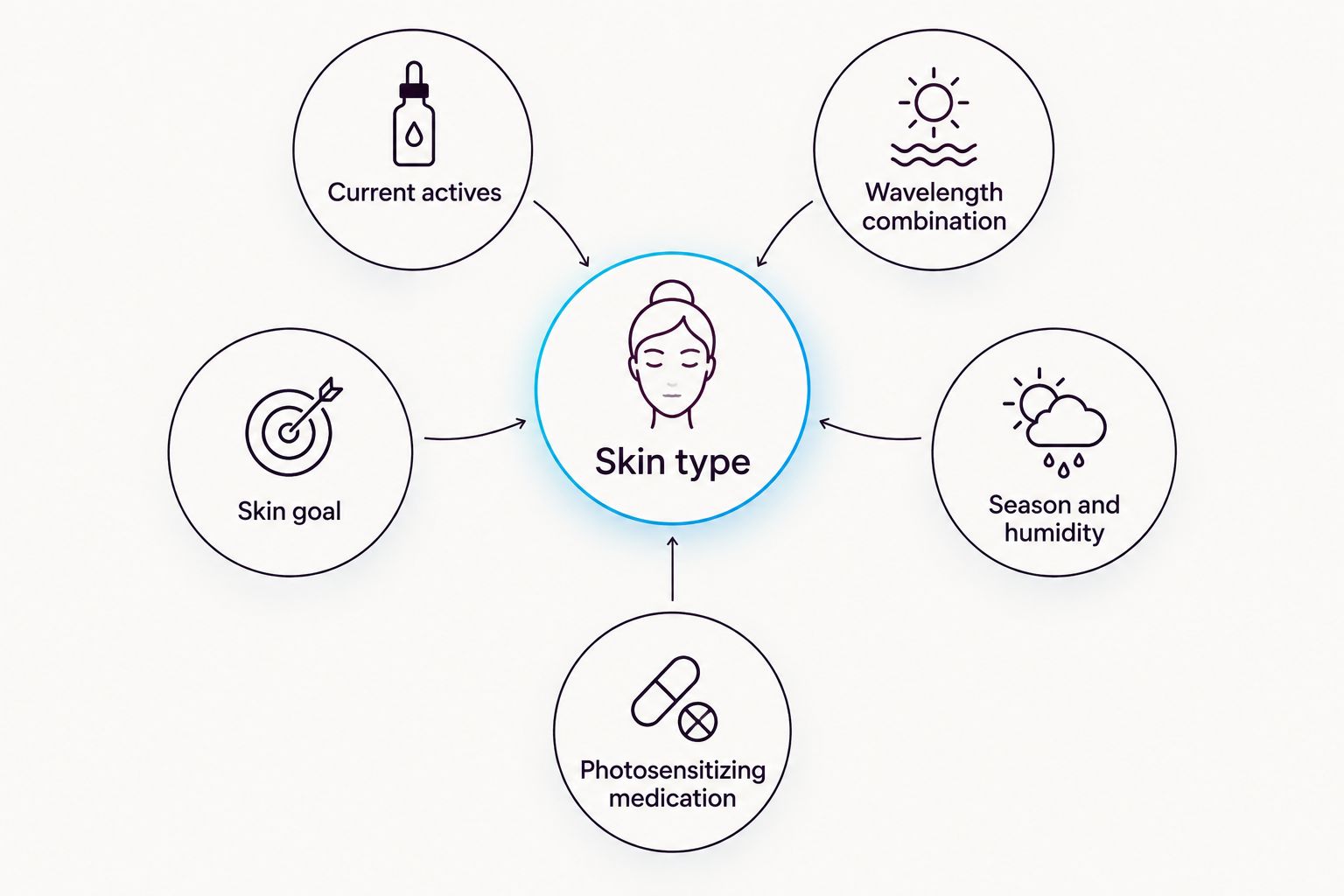
Skin type sets the range, but a handful of other factors push you toward the top or bottom of it:
Yes — running sessions above your skin type's weekly ceiling causes redness lasting more than an hour, dryness, or in some cases new breakouts, and extra sessions past that ceiling don't speed up collagen production. Once you hit your skin type's upper limit, more time under the light adds risk without adding benefit.
Most people notice tone and comfort changes within a few weeks of holding a consistent frequency instead of skipping sessions or changing the schedule constantly. Firmness and fine-line changes take longer and depend far more on sticking to the same weekly frequency than on adding extra sessions to speed things up.
Yes — drier winter skin barriers usually tolerate fewer, calmer sessions per week, while oily or acne-prone skin sometimes handles more frequent sessions in summer when oil production runs higher. Dropping from the top to the middle of your range in winter is a normal, expected adjustment, not a step backward.


What's the best red light therapy frequency for sensitive skin?
Sensitive skin does best at 2-3 sessions a week, red light only, held steady for two weeks before adding a session. Going straight to daily use on reactive skin is the most common cause of flushing complaints in 2026.
Is it safe to use red light therapy every day?
Daily use is safe for acne-prone, oily, or mature skin, but sensitive skin should stay at 2-3 sessions a week instead. Skin type, not a universal daily rule, decides whether daily use makes sense.
Does red light therapy frequency change with age?
Yes — thicker, more mature skin typically tolerates 5-6 sessions a week for collagen-focused results, while younger, more reactive skin often does better starting lower. Age changes barrier thickness, and barrier thickness is what actually sets the frequency ceiling.
Can acne-prone skin use red light therapy daily?
Acne-prone skin can go up to daily when red and blue light are combined, since blue light addresses acne bacteria while red light manages inflammation. Daily use should pause on days you're also using benzoyl peroxide or strong acids.
How do I know if I'm using red light therapy too often?
Redness lasting more than an hour after a session, new dryness, or unexpected breakouts all signal you're above your skin type's frequency ceiling. Cutting back to the lower end of your range for a week usually resolves it.
Should oily skin use red light therapy more often than dry skin?
Oily and combination skin generally tolerates 4-6 sessions a week, more than sensitive or dry skin's 2-3 to 4 session range. Oil production doesn't reduce light sensitivity, but it does correlate with a thicker, more resilient barrier.
How long should each red light therapy session last?
Session length depends on the specific device more than skin type, so check your device's instructions and hold that time steady. Skin type changes how many days a week you use it, not how long each individual session runs.
Do I need to adjust frequency after starting a retinol routine?
Yes — adding retinol or a strong acid to your routine lowers your red light therapy frequency ceiling because both thin the skin barrier. Drop to the low end of your skin type's range for two weeks after introducing a new active.
The skin type that most often gets frequency wrong isn't sensitive skin — it's normal skin owners who assume "normal" means no adjustment is ever needed, default to random use, and then wonder why results plateau by week three. Pick a number inside your range and treat it like a schedule, not a suggestion, and revisit it only when your skin's reaction — not the calendar — tells you to.
 Acne
Acne

