

Rated 4.7 out of 5 stars
4.7 / 5


726,000+ customers
Free 60-Day Returns
1-Year Warranty
726,000+ customers
Free 60-Day Returns
1-Year Warranty
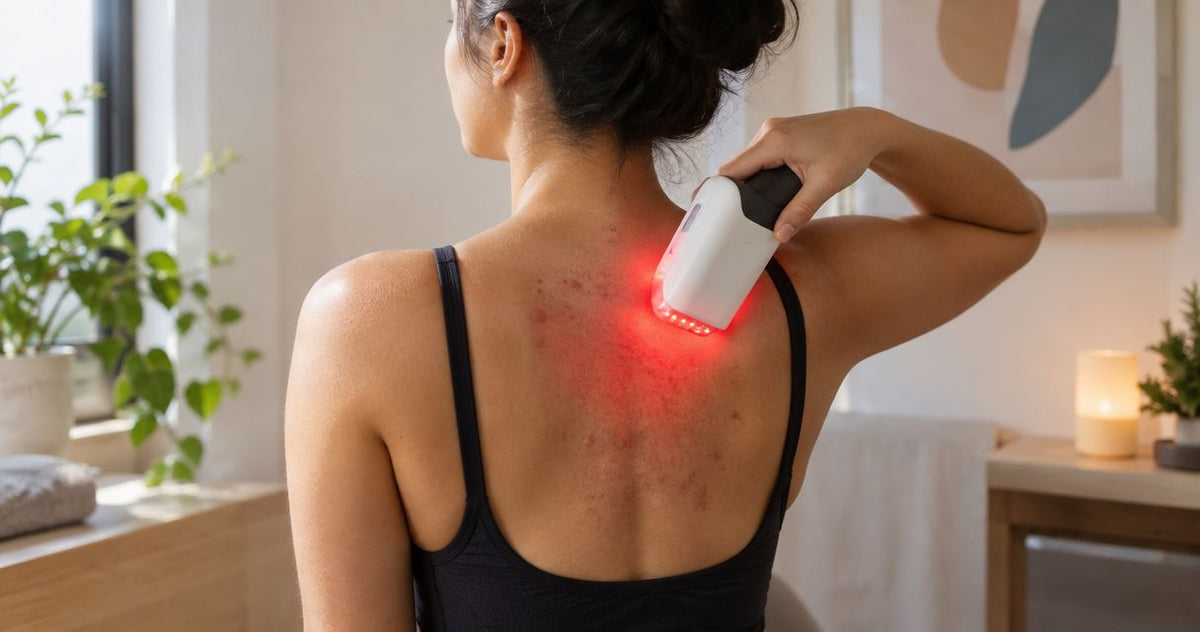
People with back acne scars use red light therapy as a noninvasive adjunct with the aim of calming visible redness and supporting a smoother-looking surface. In 2026, red light therapy for back acne scars is best suited to flat post-acne marks and mild surface unevenness; it does not fill indented scars or flatten raised scars, as Solawave’s broader guide to red light therapy for acne scars explains.
Back acne can leave several changes that look similar in a bathroom mirror but require different treatment. A flat brown, red, or purple spot is a post-inflammatory mark rather than lost or raised tissue. An indentation, firm bump, or expanding raised area is a structural scar.
That distinction controls what red light can realistically do. Red light therapy supports cellular activity associated with skin recovery and can complement care for visible redness and mild texture. It does not remove pigment like a peel, replace missing collagen inside an indentation, or flatten excess tissue in a raised scar.
The back also creates a practical constraint: much of the treatment area is hard to see and reach. In 2026, the best routine is not the one with the most steps. It is the one that covers the intended area consistently, follows the device instructions, and gives you a repeatable way to compare changes.
Start by examining the area in bright, even light. Use a mirror or ask someone you trust to check areas you cannot see clearly. Color, depth, firmness, and ongoing inflammation matter more than the age of the mark when choosing the next step.
A dermatologist should assess a raised, growing, painful, or persistently itchy scar. Those features fall outside a cosmetic light routine and can point to hypertrophic or keloid scar tissue.
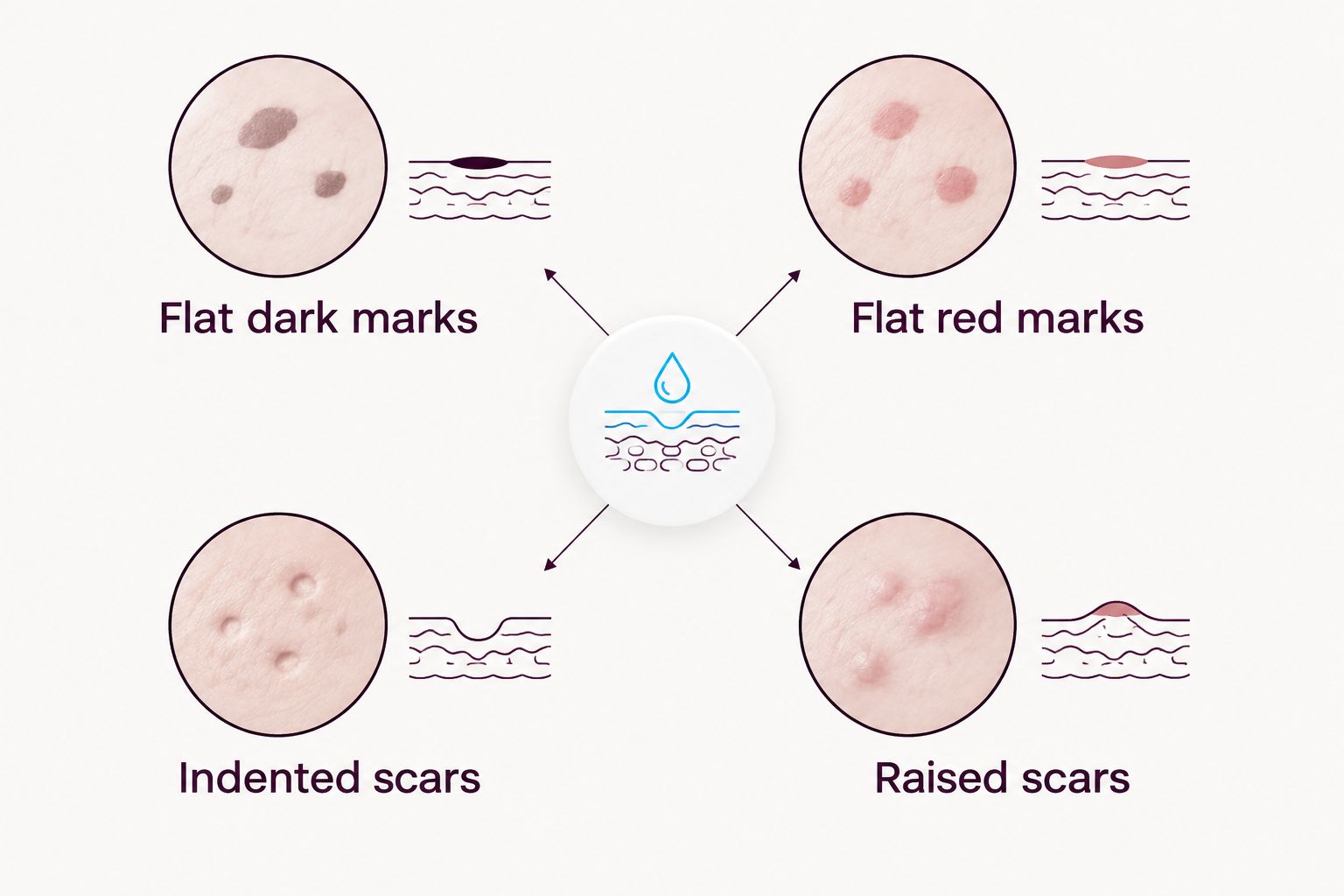
Use these visual categories to plan your 2026 routine:
Remove sweat, body lotion, sunscreen, and other residue before using a light device. Products left on the skin can affect how the device moves, create unnecessary buildup on its treatment surface, or make irritation harder to trace.
Do not pass a device over an open or draining lesion unless its instructions explicitly allow that use. Red light therapy and acne spot treatment are related categories, but they are not automatically interchangeable.
A small handheld device gives you control over isolated marks but takes more effort across a large shoulder or back area. A larger body device covers more skin at once, while professional equipment offers clinician-guided treatment for scars that need more than home care.
The 4-in-1 Radiant Renewal Skincare Wand is described for the face, neck, and jawline. That description does not establish back use, so confirm suitability with the current instructions or Solawave before applying it outside those areas.
The Bye Acne device has a 3-minute spot-treatment format and is designed for mild-to-moderate acne. Its purpose is active breakout care, not filling old indented scars. That difference matters when your back has new blemishes and older marks at the same time.


Choose your coverage method with these checks:
More exposure is not automatically better. Session length, frequency, eye protection, skin contact, and cleaning requirements vary between devices. Use the instructions for the exact model in your hand rather than borrowing a schedule from another mask, wand, panel, or social post.
Build a simple 2026 calendar around the approved schedule. Consistency makes comparison possible, while improvised extra sessions make irritation and results harder to interpret.
Back-acne routines often include retinoids, benzoyl peroxide, salicylic acid, exfoliating acids, or prescription treatments. These products can irritate skin independently of light therapy, especially when several are introduced together.
Keep an existing routine stable when adding a device in 2026. If irritation appears after changing several steps at once, you will not know whether the cause was an active ingredient, friction, treatment frequency, or the device itself.
A device that touches acne-prone skin needs cleaning according to its instructions after use. Solawave Light Therapy Device Cleaning Wipes are plant-based viscose wipes pre-soaked in 70% isopropyl alcohol, but the device manufacturer’s cleaning directions still control which products are safe for each surface.
Progress photos are more useful than checking the mirror under different lighting every day. Take each image from the same distance, position, and lighting setup. Do not use filters or automatic skin smoothing.
No single option handles active acne, flat discoloration, indented scars, and raised scars equally well. The correct choice depends on whether the visible problem is color, inflammation, missing tissue, or excess scar tissue.
| Option | Best for | Starting price | Key limitation |
|---|---|---|---|
| Solawave 4-in-1 wand | Labeled face, neck, and jawline treatment | See current product card | Back use is not established by the supplied product description |
| Bye Acne spot treatment | Mild-to-moderate active acne | See current product card | Designed for breakouts, not structural scars |
| Large-area body LED device | Broad areas that exceed a spot device | Check current listing | Specifications and approved treatment areas vary |
| Topical acne routine | Controlling breakouts and managing flat marks | Check current listing | Does not rebuild indented scar tissue |
| Dermatologist-led procedure | Indented, raised, changing, or unclear scars | Ask the provider | Requires professional assessment and appointments |
Solawave red light therapy devices are best for at-home users treating the areas named in the product instructions; back use requires confirmation for the exact model. This is the clearest 2026 verdict because FDA clearance does not mean every device is cleared for every scar type or body area.
Flat color changes and structural scars are different problems. Treating a deep indentation as if it were a surface mark delays the professional care that structural scarring needs.
New breakouts can create new marks while you focus on old ones. A scar routine should not replace acne treatment, especially when lesions remain inflamed, tender, or open.
A device can be FDA-cleared and still have specific labeled treatment areas. Confirm body-area suitability instead of assuming every red light product is interchangeable.
Longer or more frequent sessions do not guarantee faster visible change. They only move the routine away from the device directions and make reactions harder to interpret.
Bathroom lighting, camera exposure, distance, and skin moisture can make a mark look lighter or darker. Standardized photos produce a more useful record for your 2026 routine.
Does red light therapy remove back acne scars?
No, red light therapy does not remove every type of back acne scar. It is an adjunct for visible redness and mild surface concerns, while indented and raised scars require professional assessment.
What type of back acne scar responds best to red light therapy?
Flat post-acne marks and mild surface unevenness are the most suitable targets for a cosmetic red light routine. Red light cannot replace missing tissue inside an indentation or flatten raised scar tissue.
Can red light therapy fade dark marks on the back?
Red light therapy supports skin recovery but does not directly bleach pigment. Dark post-acne marks often require sun protection and a pigment-focused routine alongside any light treatment.
Can I use a Solawave wand on my back?
Confirm back use in the instructions for your exact Solawave model before applying it there. The supplied description for the 4-in-1 Radiant Renewal wand names the face, neck, and jawline rather than the back.
How often should I use red light therapy for back acne scars?
Use only the frequency listed for your exact device. There is no universal schedule covering every wand, panel, mask, treatment area, and skin condition.
Can I treat active back acne and old scars together?
Use treatments according to their stated purpose rather than treating every area identically. The Bye Acne device is designed for mild-to-moderate active acne, while old indented or raised scars need a different approach.
How much does at-home red light therapy cost in 2026?
Costs vary by device and treatment format, so check the current product cards or provider listing. Avoid choosing by price alone because coverage area and labeled use determine whether a device fits your back routine.
When should I see a dermatologist about back acne scars?
See a dermatologist when a scar is indented, raised, growing, painful, persistently itchy, or difficult to identify. Professional assessment is also appropriate when active acne continues despite your current routine.
The most useful first step is not buying a stronger device. It is deciding whether you have flat marks, structural scars, active acne, or a mixture of all three. Take a clear baseline photo in 2026, identify each area separately, and choose one treatment goal at a time.
 Acne
Acne

