

Rated 4.7 out of 5 stars
4.7 / 5


726,000+ customers
Free 60-Day Returns
1-Year Warranty
726,000+ customers
Free 60-Day Returns
1-Year Warranty
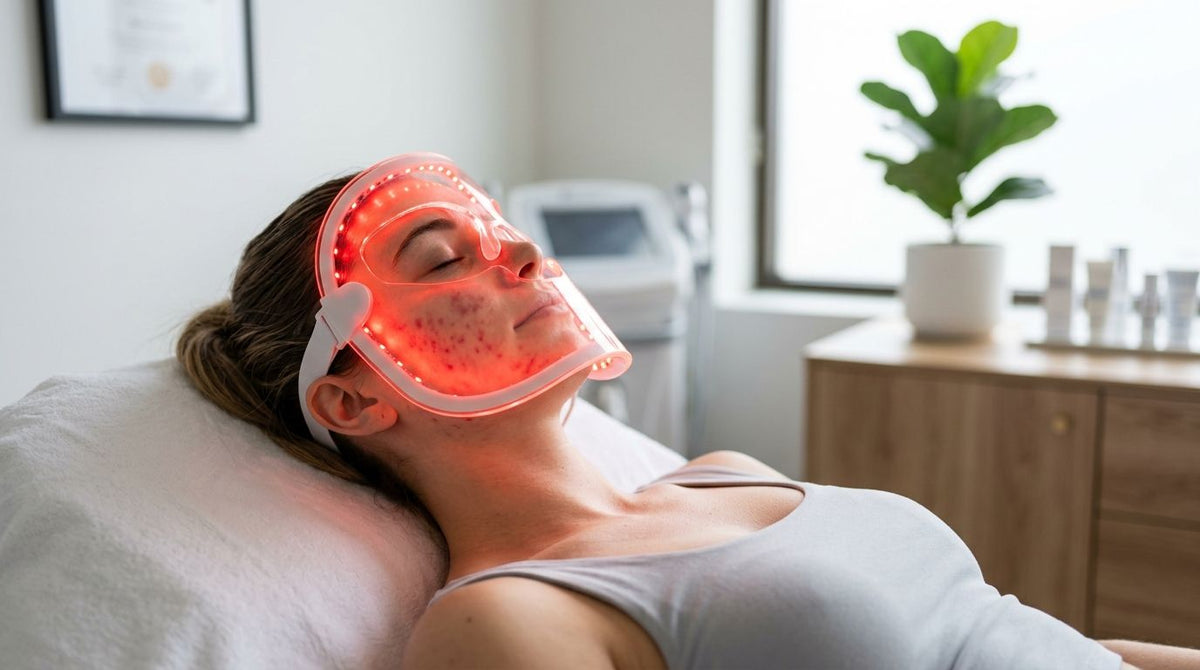
Post-inflammatory erythema (PIE) is the flat, pink-to-red discoloration left behind after a pimple, cut, or irritation heals, caused by damaged capillaries sitting close to the skin's surface rather than pigment. If you're dealing with lingering red marks that outlast the breakout itself, the goal isn't scar repair — it's calming visible blood vessels and rebuilding a stronger skin barrier so the redness fades instead of settling in.
PIE behaves differently than post-inflammatory hyperpigmentation (PIH), which shows up as brown or tan marks from excess melanin. People with PIE need vascular-calming, barrier-supportive routines; people with PIH need pigment-targeting ingredients like vitamin C or niacinamide. Confusing the two wastes months on the wrong products.
People dealing with PIE have usually already been through an acne flare, a picked pimple, or a reactive skin episode — their skin barrier is often compromised before the redness even shows up. That means aggressive actives (strong retinoids, high-percentage acids) that work fine for someone chasing texture or dark spots can actually prolong redness in a PIE-prone reader by reinjuring already-sensitized capillaries.
Red light therapy is attractive to this segment specifically because it's non-abrasive: it doesn't exfoliate, doesn't require downtime, and is FDA-cleared for at-home use, which matters to a reader who's already cautious about irritating healing skin. Solawave's devices are red light therapy for post-inflammatory erythema tools built around that exact use case — calming inflammation without adding a new irritant to the routine.
Before building a routine, verify what you're looking at. Misidentifying the mark type is the single biggest reason people stall out on results.
Red light therapy for post-inflammatory erythema rewards routine over intensity. Skipping days and then doing a long session to compensate doesn't accelerate results — it just delays them.
A compromised skin barrier keeps capillaries closer to the surface, which keeps PIE visible longer. Supporting the barrier directly speeds up what red light therapy is already doing.
Redness that won't fade is often being re-triggered daily by heat and UV exposure, undoing whatever progress red light sessions are making.
Redness fades gradually enough that day-to-day memory is unreliable. A reader who only checks the mirror will underestimate progress and quit early.
Applying a conductive serum before a wand session helps the device glide and can improve how well topical ingredients absorb during treatment. The 4-in-1 Radiant Renewal Skincare Wand with Red Light Therapy is built to pair with a serum step rather than being used dry, and the Wrinkle Retreat Pro LED Face Mask covers the full face for readers dealing with erythema across multiple areas rather than one spot.
For readers managing redness alongside brown post-acne marks, the hyperpigmentation guide covers how to layer pigment-focused actives without undoing barrier repair work.
| Option | Best for | Key limitation |
|---|---|---|
| At-home LED wand (Solawave 4-in-1 Radiant Renewal) | Spot-treating individual PIE marks daily | Requires consistent daily use over weeks to see change |
| At-home LED face mask | Full-face redness from widespread breakouts | Covers face only, not neck or chest without a separate device |
| In-office vascular laser (dermatologist) | Stubborn, long-standing PIE that hasn't responded to home care | Requires appointments, downtime, and professional supervision |
| Topical niacinamide or ceramide serum alone | Barrier support as a standalone step | Doesn't address the vascular component the way light exposure does |
Verdict: for daily, at-home management of post-inflammatory erythema, a red light therapy wand paired with a barrier-repair serum is the most practical starting point in 2026 — reserve in-office lasers for marks that haven't moved after a full course of consistent at-home treatment.


For readers combining a full acne routine with erythema recovery, how to get better results from red light therapy covers session cadence and product layering in more depth.
What is the best treatment for post-inflammatory erythema in 2026?
A consistent at-home red light therapy routine paired with a barrier-repair moisturizer is the most accessible first-line option in 2026. Stubborn cases that don't respond after weeks of daily use may need a dermatologist-administered vascular laser.
Is red light therapy better than hyperpigmentation treatments for red marks?
Yes, if the marks are red and blanch under pressure, since that indicates a vascular issue rather than pigment. Hyperpigmentation treatments like vitamin C target brown melanin marks, not visible redness.
How long does post-inflammatory erythema take to fade?
PIE fades gradually and unevenly, which is why weekly photo tracking works better than daily mirror checks. Consistency in a red light routine, sun protection, and avoiding re-irritation all shorten the timeline.
Can I use red light therapy on active breakouts and PIE at the same time?
Yes, red light therapy is non-abrasive and doesn't require the skin to be fully healed first. Keep the surrounding routine gentle so you're not reinjuring the area while treating both.
Does SPF actually matter for red marks that aren't brown?
Yes, SPF 30 or higher matters for PIE just as much as for pigmentation, since UV exposure keeps capillaries dilated and prolongs visible redness. Skipping sunscreen is one of the most common reasons red marks linger.
Is a red light therapy wand or a full-face mask better for erythema?
A wand is better for spot-treating one or two stubborn marks, while a full-face mask suits widespread redness from multiple breakouts. Pick based on how localized the redness is.
Will niacinamide help with post-inflammatory erythema?
Niacinamide supports barrier function and can reduce redness-related inflammation, making it a reasonable addition alongside red light therapy. It won't replace the vascular-calming effect of light exposure on its own.
The detail most people miss: PIE responds to consistency of exposure, not intensity of any single session — a reader who runs a short daily session for a month will out-progress someone doing long sessions twice a week. Solawave's devices being FDA-cleared and recommended by 750+ Doctors & Medical Experts matters less than whether you actually show up with the device every day in 2026.
 Acne
Acne

