

Rated 4.7 out of 5 stars
4.7 / 5


726,000+ customers
Free 60-Day Returns
1-Year Warranty
726,000+ customers
Free 60-Day Returns
1-Year Warranty
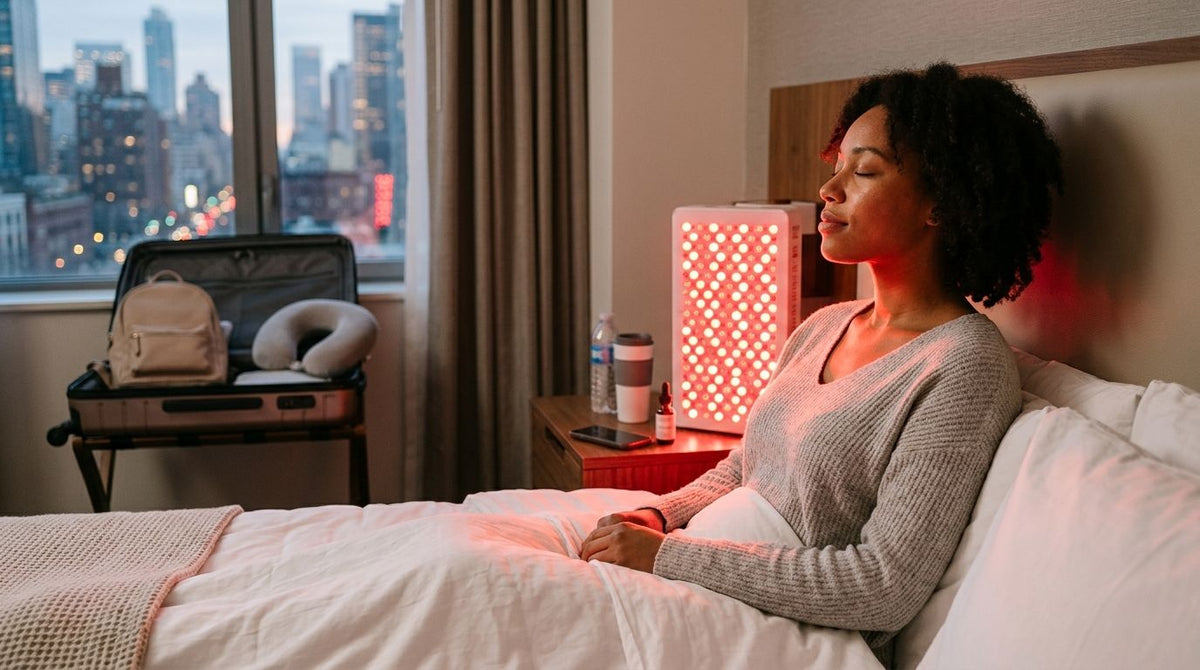
Red light therapy for travel skin fatigue is a targeted at-home routine for frequent flyers who land looking older than they boarded, using specific red and near-infrared wavelengths to counter the puffiness, dullness, and dehydration lines that show up after a flight. Travelers deal with a compressed window — a few hours in transit and a few more before a meeting or event — so the routine has to work fast, pack small, and not depend on a spa appointment.
A long-haul flight is a controlled dehydration experiment. Cabin humidity sits around 10-20%, compared to 30-60% at ground level, and that gap pulls moisture out of skin for the entire flight. Add a pressurized cabin at roughly 35,000 ft, disrupted sleep, and a few time zones, and skin shows it within hours: tight cheeks, dull tone, puffier under-eyes, and fine lines that look more pronounced than they did at home.
Red and near-infrared light don't rehydrate skin the way a humidifier would, but they push blood flow to the surface and support the skin's own repair response, which is exactly what tired, travel-worn skin needs on arrival. Travelers are also a specific use case: they need a device that fits carry-on rules, doesn't need a sink or outlet mid-flight, and delivers a visible difference in one short session rather than a six-week program.
Skin fatigue starts before you board, not after you land. A few adjustments the night before and morning of make the in-flight dehydration hit less hard.
Waiting until landing to address travel skin fatigue means fighting hours of moisture loss instead of preventing it.
The first hour after landing is the highest-leverage window for reversing travel skin fatigue, before dullness and puffiness fully set in.
Jet lag hits the eye area hardest — broken sleep shows up as puffiness and darkness faster than anywhere else on the face.
One rough flight can undo weeks of barrier-building work. The 24-48 hours after landing decide whether your skin recovers fast or stays reactive for the rest of the trip.
A single post-flight session helps, but travel skin fatigue compounds over a multi-day trip with new time zones, different water, and disrupted sleep every night.
Jet lag recovery and skin recovery run on similar timelines, and syncing the two speeds up how quickly you look like yourself again.
| Option | Best for | Key limitation |
|---|---|---|
| Handheld red light wand | Travelers who want a five-minute targeted session | Requires manual sweeping motion, no hands-free use |
| LED face mask | Travelers with longer downtime, like a layover hotel stay | Bulkier to pack than a wand |
| Hydrating mist + moisturizer only | Short flights under three hours | Doesn't address deeper dullness or puffiness from multi-leg trips |
| Under-eye cream alone | Travelers only dealing with puffiness, not overall dullness | Leaves cheeks and forehead dryness untreated |
Verdict: a compact red light wand paired with a hydrating routine is the best-for-travel option when packing space and time are both limited — face masks work better for travelers with a hotel layover long enough to sit still for 10-15 minutes.


Does red light therapy actually help with jet lag skin?
Red light therapy doesn't treat jet lag itself, but it supports circulation and skin repair, which visibly reduces the dullness and puffiness that show up after long flights. Pairing it with hydration and sleep-schedule adjustment gets the fastest visible result.
Can I bring a red light therapy device on a plane?
Yes, compact handheld red light devices are carry-on friendly and don't contain restricted battery sizes when they use standard rechargeable lithium batteries under airline watt-hour limits. Check your specific device's battery rating against your airline's carry-on rules before packing.
How soon after landing should I use red light therapy?
The first hour after landing is the highest-leverage window, before dullness and puffiness fully set in. A short session paired with cleansing and moisturizing works better than waiting until the next morning.
What causes travel skin fatigue in the first place?
Cabin humidity runs 10-20%, roughly a third of ground-level humidity, and that gap pulls moisture from skin for the length of a flight. Combined with disrupted sleep and lower cabin air pressure at cruising altitude, skin looks dull, tight, and puffier than usual.
Is a red light face mask or a handheld wand better for travel?
A handheld wand packs smaller and works in a five-minute session, making it the better fit for tight travel schedules. A face mask works better when a traveler has a longer layover or hotel stay and can sit still for 10-15 minutes.
How do I reduce under-eye puffiness from a long flight?
A chilled, caffeine-based eye cream combined with a red light session targets jet lag puffiness faster than concealer or cold spoons alone. Gentle tapping application, not dragging, protects the delicate skin around the eyes.
Should I do a red light session before a flight too?
Yes, a short session the morning of departure banks some circulation benefit before hours of dry cabin air start working against your skin. Pre-flight prep matters as much as post-landing recovery for travel skin fatigue.
The most overlooked detail in travel skin fatigue isn't the flight itself — it's the return leg. Travelers who diligently prep before the outbound flight often skip the same routine coming home because the trip already feels finished, then wonder why they land back at their desk looking worse than when they left. Treat the flight home with the same five-minute routine as the flight out, and the recovery on the other end is faster both times.
 Acne
Acne

