

Rated 4.7 out of 5 stars
4.7 / 5


726,000+ customers
Free 60-Day Returns
1-Year Warranty
726,000+ customers
Free 60-Day Returns
1-Year Warranty
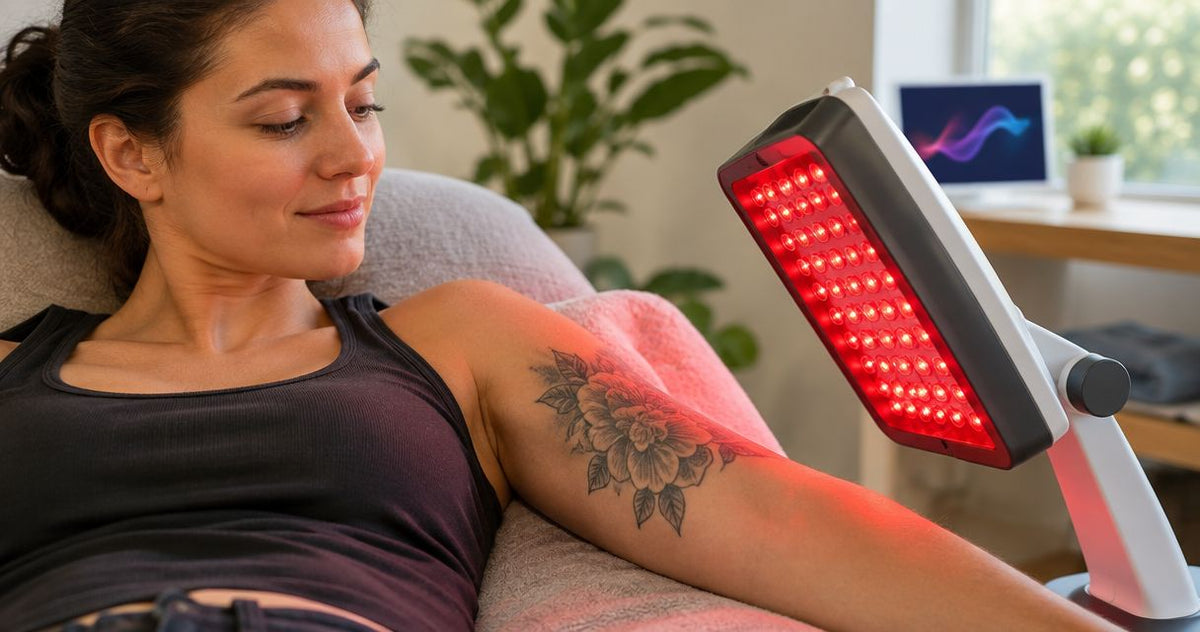
Red light therapy after tattoo removal helps calm lingering redness and support the skin barrier once the treated area has fully closed, but running an LED or red light device over skin that's still blistered or scabbed slows healing instead of speeding it up.
Laser tattoo removal breaks down ink particles with pulses that create controlled thermal injury to the skin. That's why the treated area blisters, scabs, and sheds over roughly 10 to 14 days per session. Putting a light-based device on that wound before it closes adds heat and mechanical contact to skin that hasn't rebuilt its barrier yet.
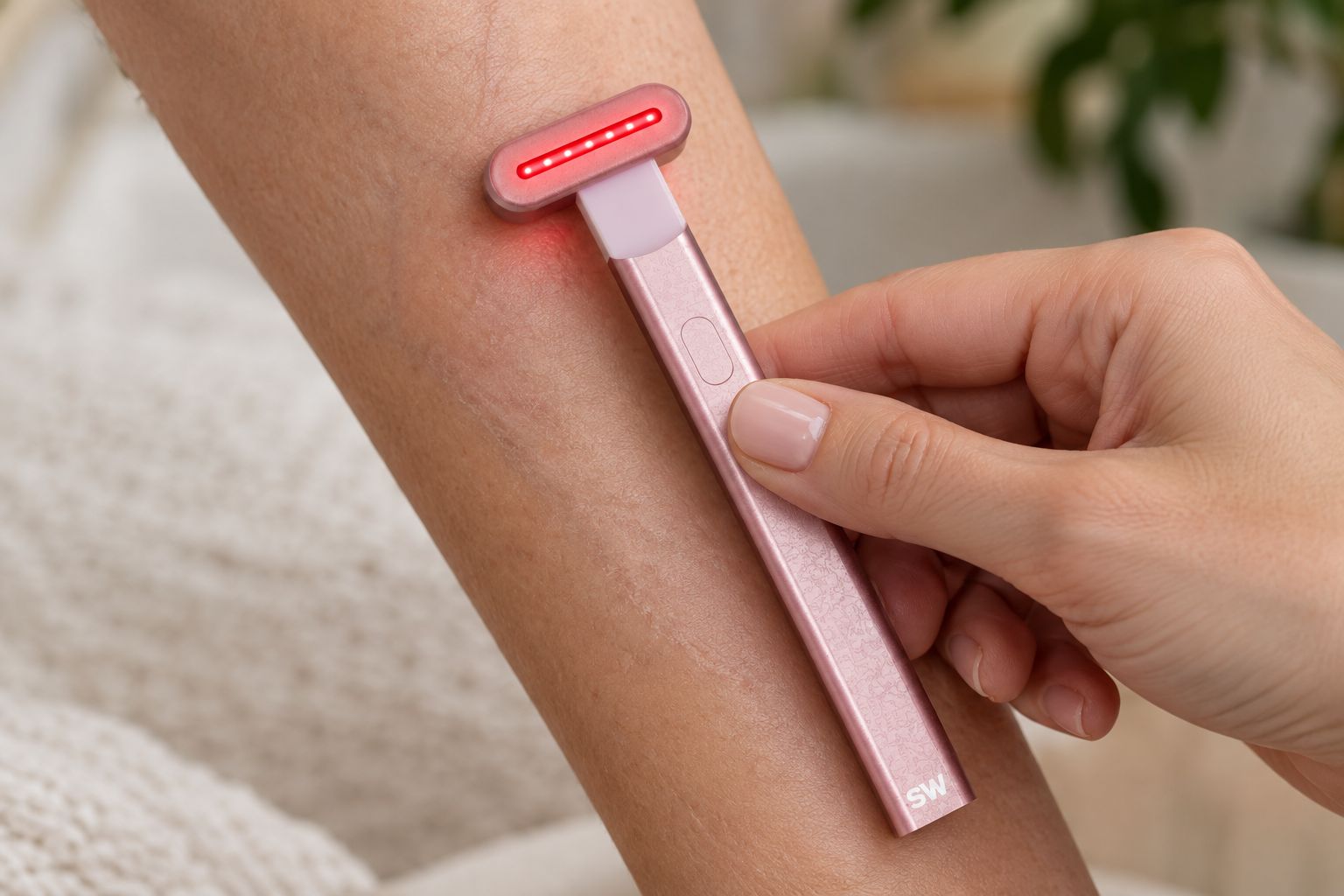
Once the site fully closes, the skin behaves a lot like sun-damaged or post-inflammatory skin: some redness, a bit of pigment shift, and a barrier that responds well to gentle, non-abrasive support. That's the window where a device like the 4-in-1 red light therapy wand or an LED mask earns a spot in the routine — not as a substitute for the removal process, but as a way to calm the redness that outlasts the ink.
In 2026, at-home skincare routines increasingly treat post-procedure red light use as maintenance, not treatment. Solawave's devices are FDA-cleared for facial wrinkles and fine lines — that clearance says nothing about tattoo removal wound healing. Treat any claim that a red light device speeds up ink clearing as marketing, not medicine.
“If the treated area is still weeping or scabbed, no light device belongs on it yet.”
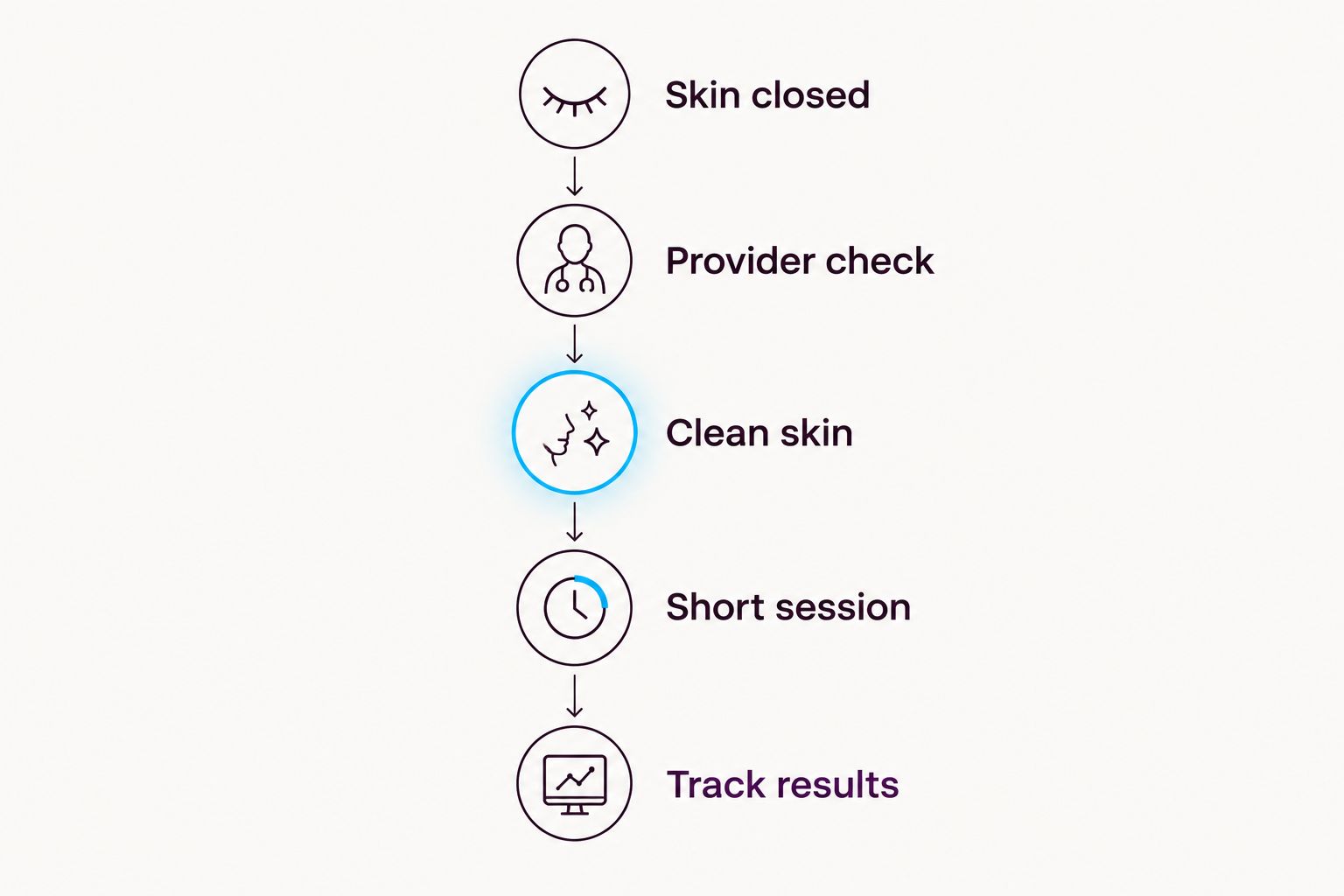
Before anything touches the treated skin, check that it has finished shedding and formed intact new skin — no scabs, no shine from weeping, no blistering.
Every removal clinic sets its own aftercare timeline based on ink density, skin tone, and how many passes the laser made. Ask directly whether adding red light therapy interferes with the removal plan before the next appointment. The post-procedure recovery guide covers what most providers check for at a follow-up.
The first few sessions on a tattoo removal site should run shorter than a full facial routine. Redness that lasts more than an hour afterward is a signal to back off, not push through.
Memory is unreliable for judging whether redness is fading. A weekly photo in the same light catches changes that a mirror check misses.
| Option | Best for | Key limitation |
|---|---|---|
| At-home red light wand (Solawave 4-in-1 Radiant Renewal) | Small removal sites like a wrist or ankle tattoo, once closed | Not cleared for wound healing — treats surrounding redness, not the ink removal itself |
| LED face or neck mask | Larger removal areas on the face, neck, or chest | Full coverage takes longer per session than a handheld wand |
| In-office LED add-on at the removal clinic | Anyone who wants provider supervision during the healing window | Requires an extra visit and isn't offered by every clinic |
| Standard aftercare alone, no light therapy | Anyone still in the blistering or scabbing phase | Redness fades slower once skin has closed with nothing added |
Verdict: red light therapy after tattoo removal is worth adding once the site is fully closed, and a device like Solawave's 4-in-1 Radiant Renewal Wand is a reasonable at-home pick for calming the redness left behind — skip it entirely while the area is still healing.


Is red light therapy safe after tattoo removal?
Red light therapy is safe after tattoo removal once the treated skin has fully closed, usually 10 to 14 days after a laser session. Using it on open, blistered, or scabbed skin risks irritation and slower healing.
How soon after tattoo removal can I use red light therapy?
Wait until the site has stopped scabbing and weeping, which typically takes 10 to 14 days per session. Check with the provider who did the removal before adding any light-based device.
Can red light therapy speed up tattoo removal?
No. Red light therapy doesn't break down tattoo ink; laser removal does that. Red light can support the surrounding skin's recovery and calm redness once the site is closed, but it isn't a substitute for removal sessions.
Does red light therapy help with redness after laser tattoo removal?
Red light therapy is commonly used to calm redness and support skin recovery once a treated area has closed. It targets the lingering redness left behind, not the ink itself.
Can I use an LED mask on a tattoo removal site on my neck or chest?
An LED mask designed for the neck and chest can cover larger removal areas once the skin has closed, but full coverage sessions take longer than a handheld wand pass over a small spot.
Is Solawave's device FDA-cleared for tattoo removal aftercare?
No. Solawave's 4-in-1 Radiant Renewal Wand is FDA-cleared for facial wrinkles and fine lines, not for tattoo removal wound care. Use it on closed skin as general skin support, not as treatment for the removal itself.
What if my skin gets darker after starting red light therapy post-removal?
Darkening usually signals the area needs more healing time, not more light exposure. Pause sessions and let the site settle before resuming.
The redness that outlasts the tattoo — post-inflammatory erythema — is the actual target for red light therapy after tattoo removal, not the ink. Most people expect the light device to speed up ink clearing; it doesn't. What it can do, once skin is closed, is shorten how long that leftover redness sticks around between laser sessions in 2026's typical 6 to 8 week spacing.
 Acne
Acne

