

Rated 4.7 out of 5 stars
4.7 / 5


726,000+ customers
Free 60-Day Returns
1-Year Warranty
726,000+ customers
Free 60-Day Returns
1-Year Warranty
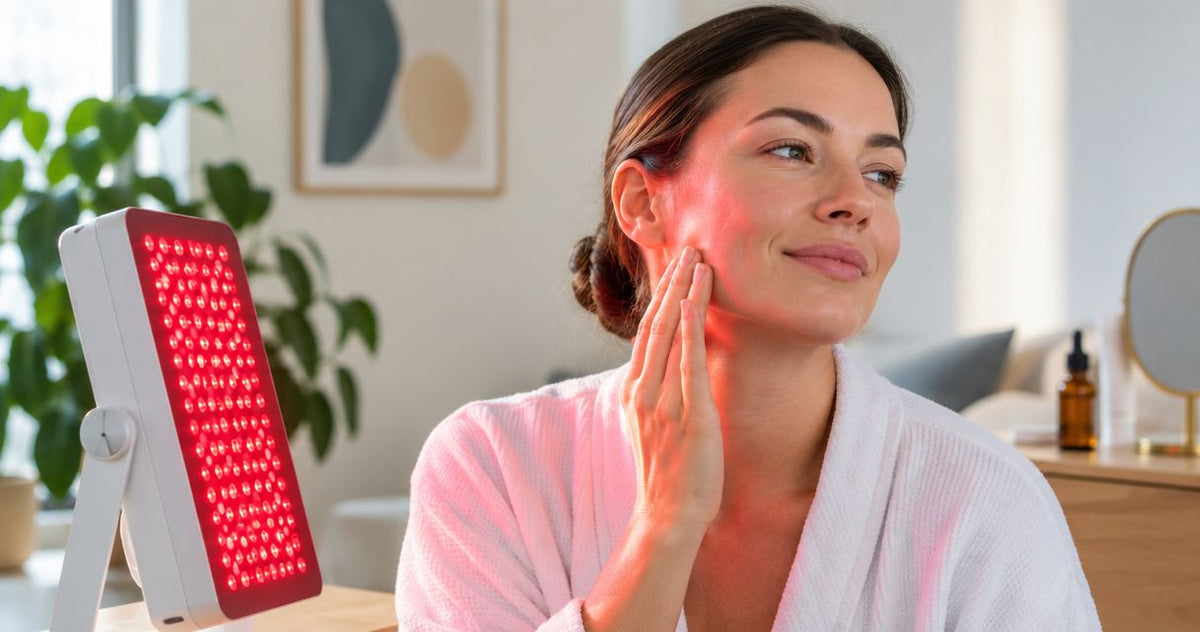
Red light therapy for Ozempic face targets the skin laxity, deflation, and dullness that show up after rapid weight loss on GLP-1 medications like semaglutide and tirzepatide, using at-home LED devices to support collagen production instead of replacing lost facial fat. This segment isn't dealing with slow, decade-long aging — the change happens over weeks to months, which means the skin's support structure lags behind the number on the scale. That timing gap is what a red light routine is built to close.
Dermatologists have been describing "Ozempic face" since GLP-1 medications like Ozempic, Wegovy, and Zepbound became widely used for weight loss: fast fat loss in the cheeks and midface leaves behind skin that lost its underlying cushion, showing up as hollowing, sagging, and a flatter, duller texture. Weight loss removes fat volume in weeks. Skin elasticity does not rebuild on that same timeline, which is exactly the gap this segment is stuck in.
Red light therapy doesn't put fat back into the cheeks. What it does is stimulate the fibroblasts that build collagen and elastin, the tissue holding skin taut against whatever volume is left underneath. That's a firmness problem, not a volume problem, and at-home devices from brands like Solawave are built around treating firmness and texture, not filling hollows back in.
If weight loss on the medication has stabilized and the main complaint is looseness and dullness rather than dramatic hollowing, red light therapy is a reasonable first move before considering fillers or an in-office procedure in 2026. If the hollowing is severe, light therapy still helps the surrounding skin quality, but it won't be the whole answer on its own.
Not every post-weight-loss change is the same problem, and treating the wrong one wastes months of effort.
Collagen response builds with repetition, not with one long session done right before a photo.
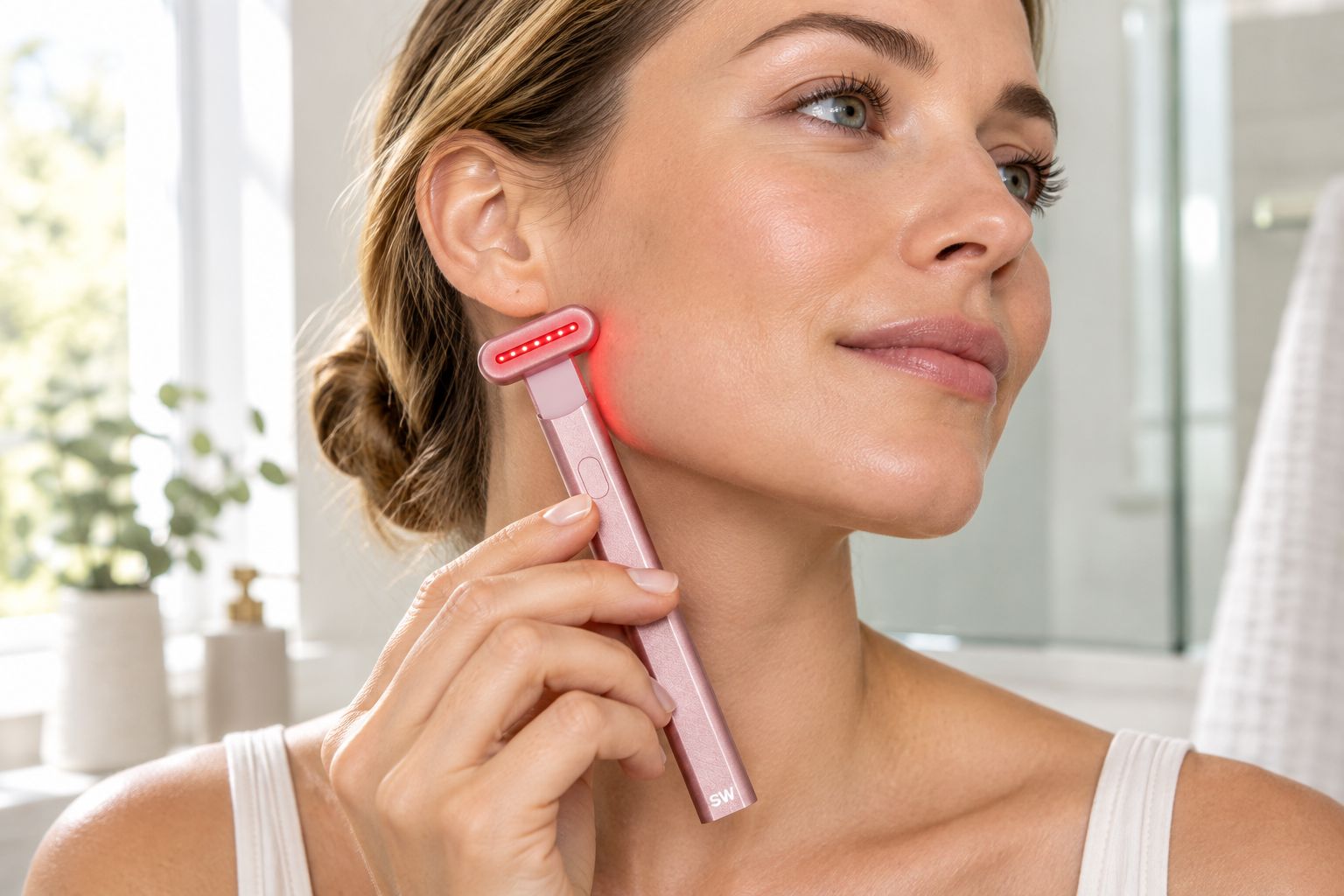
GLP-1 weight loss often shows first at the jaw and neck, not the cheeks, because that skin is thinner and has less structure to hold onto in the first place.
What's on the skin before the session matters as much as the session itself.
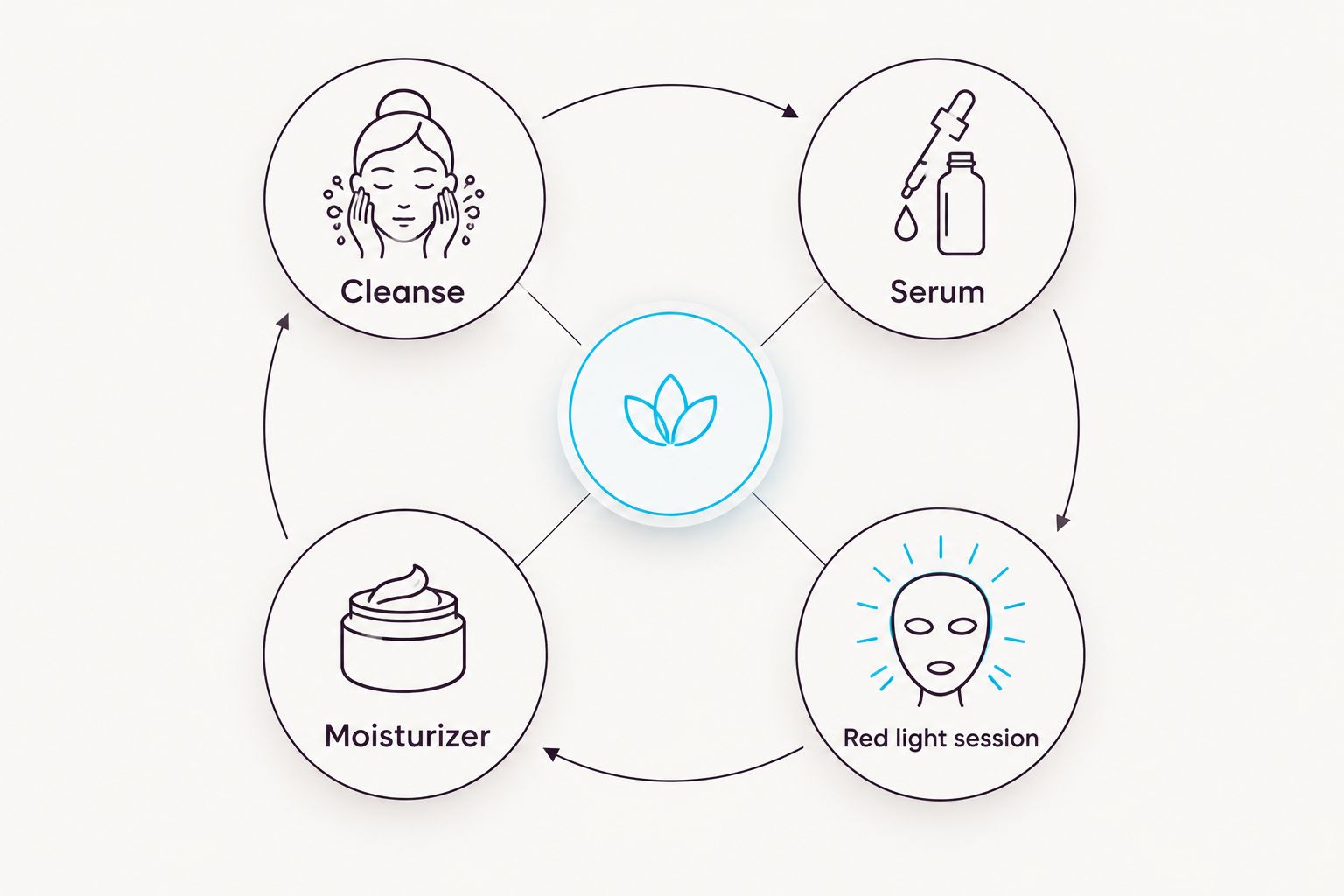
Rapid fat loss stresses the skin's support structure temporarily, and an already-stressed barrier doesn't respond well to daily LED sessions stacked with a pile of new actives.


| Option | Best for | Key limitation |
|---|---|---|
| Facial massage or gua sha | Free daily circulation support | Doesn't rebuild collagen or address volume loss |
| Over-the-counter firming creams | Surface hydration and temporary plumping | Effects fade within hours; no structural change |
| At-home LED red light devices | Consistent collagen support alongside weight loss | Won't restore lost facial fat volume on its own |
| Dermatologist procedures (fillers, Sculptra) | Restoring lost volume directly | Requires ongoing professional appointments |
Verdict: red light therapy is the right tool for firmness and texture during and after GLP-1 weight loss; it's the wrong tool if the main complaint is hollowed-out cheeks that need volume put back.
“If you only treat the cheeks and ignore the neck, Ozempic face keeps showing up in the mirror.”
What is Ozempic face and can red light therapy help?
Ozempic face describes the hollowing, sagging, and dullness that follow rapid weight loss on GLP-1 medications. Red light therapy supports the collagen and elastin that hold remaining skin taut, but it does not restore lost fat volume.
How long does red light therapy take to show results on Ozempic face?
Most people notice firmness and texture change closer to 8-12 weeks of consistent use in 2026, not after one or two sessions. Judging results before that window undersells what the device can do.
Should I use red light therapy while still losing weight on semaglutide?
Yes, starting a routine while weight loss is active builds collagen support as the skin's demands increase, rather than waiting until sagging is already visible. Reduce frequency if skin looks irritated during rapid change.
Can red light therapy replace fillers for Ozempic face?
No. Red light therapy treats skin firmness and texture; fillers and volumizing procedures like Sculptra address the actual fat loss. Severe hollowing usually needs both approaches, not one instead of the other.
How often should I use an LED face mask for GLP-1 related skin changes?
Most routines run 3-5 sessions a week rather than daily marathon sessions. Consistency across weeks matters more than the length of any single session.
Does red light therapy help sagging skin from Ozempic or Zepbound?
It helps the collagen-driven laxity component of sagging from either medication, since the underlying skin mechanism is the same rapid-fat-loss effect. It does not reverse sagging caused purely by lost volume.
Is red light therapy safe to use with tirzepatide or semaglutide?
Red light therapy is a topical LED treatment and doesn't interact with GLP-1 medications systemically. Anyone with specific skin or medical concerns should confirm with a dermatologist before starting a new device routine.
What's the difference between a red light wand and a full-face mask for Ozempic face?
A wand targets specific areas like the jawline, cheeks, or neck and works well for spot treatment. A full-face mask covers the whole face at once and suits a hands-free daily routine.
Ozempic face is actually two separate problems wearing one name: volume loss and skin laxity. Red light therapy in 2026 only addresses the second one. If a dermatologist confirms the hollowing is significant, pairing a consistent red light routine with a volume-restoring procedure gets further than either approach alone. Treating the neck and jaw as seriously as the cheeks is the step most people skip, and it's the one that shows up first in photos.
 Acne
Acne

