

Rated 4.7 out of 5 stars
4.7 / 5


726,000+ customers
Free 60-Day Returns
1-Year Warranty
726,000+ customers
Free 60-Day Returns
1-Year Warranty
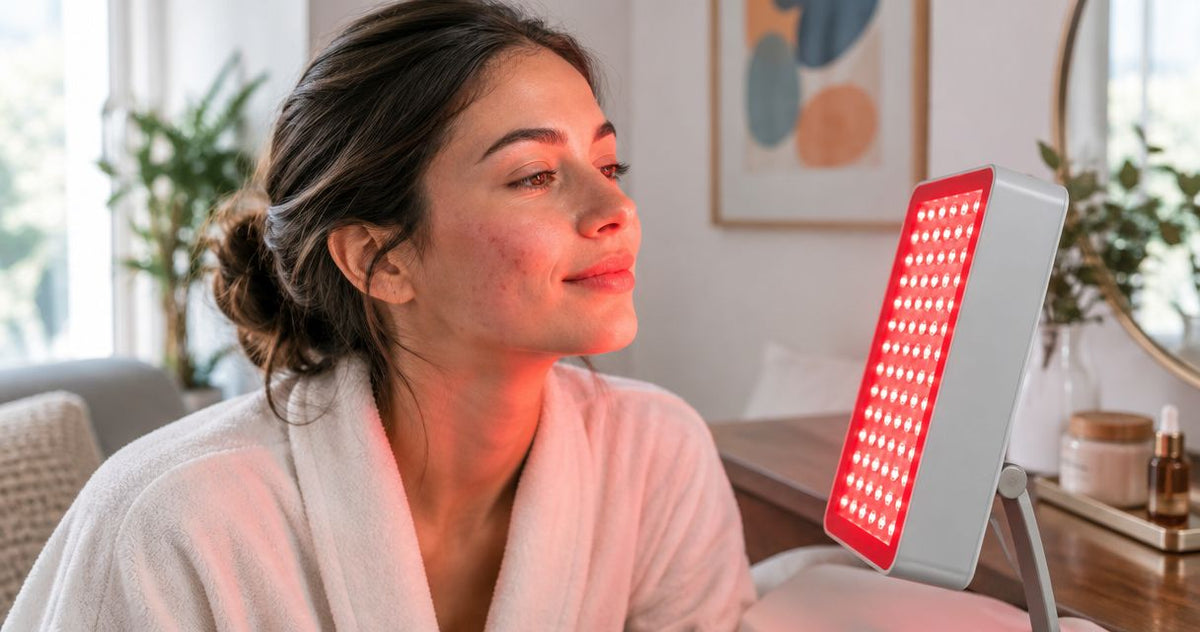
Perimenopause acne breakouts respond to red light therapy because the light calms inflammation and speeds healing without stripping a moisture barrier that's already thinning in your 40s. This segment isn't fighting teenage oil production — it's fighting dropping estrogen, erratic progesterone, and skin that heals slower and reacts harder to actives that used to work fine.
Perimenopause typically starts in your late 30s to mid-40s and can last four to eight years, and the hormonal swings during that window show up on skin as jawline and chin breakouts that flare around ovulation and again before a period, even in women who never dealt with adult acne before. Hormonal acne driven by estrogen decline behaves differently than androgen-driven teen acne: it's cystic, slow to surface, and sits under skin that's also losing collagen and oil at the same time.
Treating it like teen acne — stripping oil, exfoliating hard, hitting it with benzoyl peroxide — usually backfires here. Red light therapy addresses the inflammation and slow healing directly instead of drying out skin that's already dry. That distinction is the reason a generic acne guide doesn't work for this segment in 2026.
“If breakouts follow your jawline in a monthly pattern even after your cycle turns irregular, that's perimenopausal hormonal acne, not diet or stress alone.”
Hormonal acne in perimenopause has a signature: it clusters on the jawline, chin, and sometimes the neck, and it flares on a roughly monthly cycle even after periods become unpredictable. Confirming the pattern before spending money on treatment saves you from throwing acids at a problem acids don't fix.
Perimenopausal skin loses collagen and oil production at the same time acne shows up, so a routine built for oily 20-something skin will over-strip it fast.
This is where the free options run out. You can ice a cyst or dab on sulfur, but there's no manual way to deliver red light to skin — that takes a device. Red light in the 630-660 nanometer range reduces inflammatory acne by calming the overactive immune response in the follicle, while near-infrared wavelengths support the repair collagen-depleted skin needs.
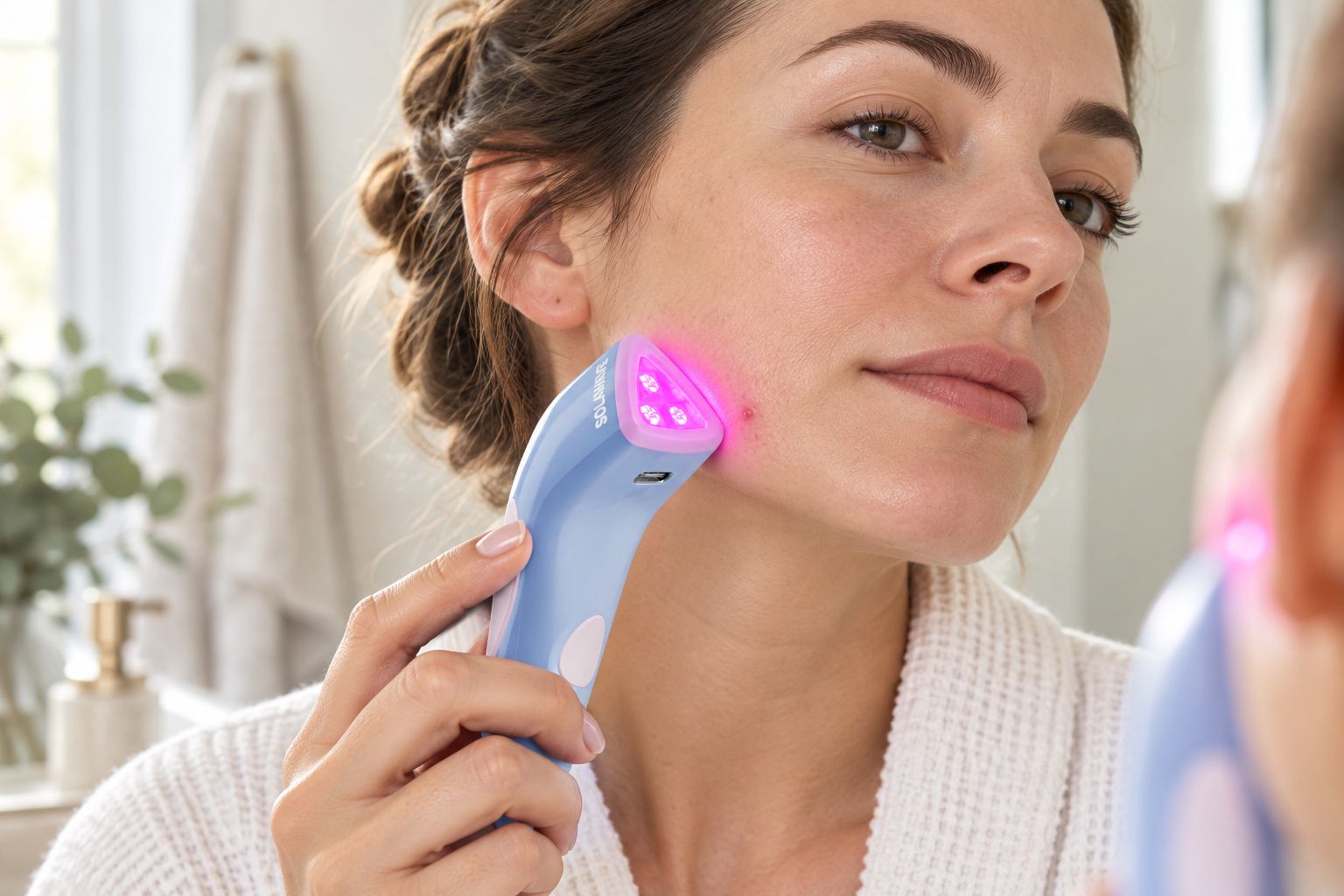
Red light works better on skin that isn't compromised by exfoliation done the same day, so timing the actives around it matters as much as picking the right one.


One cycle of data can be a coincidence. Two cycles of the same jawline pattern confirms it's hormonal, not seasonal, dietary, or product-related.
Red light therapy works on cell turnover timelines, not overnight timelines. Dermatology guidance on LED treatments generally points to 8 to 12 weeks of consistent use before inflammatory acne visibly calms, so a two-week trial tells you nothing.
| Option | Best for | Key limitation |
|---|---|---|
| OTC benzoyl peroxide spot gel | Occasional single blemishes | Dries and irritates thinning perimenopausal skin with regular use |
| Prescription spironolactone | Hormonal acne managed with a dermatologist | Requires a prescription and ongoing bloodwork monitoring |
| 4-in-1 Radiant Renewal Skincare Wand | Daily red light plus warming massage across the jawline | Treats the whole face, not a dedicated spot-acne tool |
| General blue-light-only device | Surface bacteria on active whiteheads | Skips the anti-inflammatory benefit red light adds for cystic breakouts |
Solawave's Bye Acne spot treatment is the clearest fit for cystic jawline breakouts in perimenopause because it combines red and blue light in one FDA-cleared, spot-sized device rather than asking you to run a full-face mask for one or two problem areas.
What causes acne during perimenopause?
Perimenopausal acne is driven by dropping estrogen and erratic progesterone rather than excess oil, which is why it clusters on the jawline and chin instead of the forehead. It often appears in women who had clear skin through their 20s and 30s.
Is red light therapy for perimenopause acne effective?
Red light therapy reduces the inflammation behind cystic hormonal breakouts and supports skin repair without stripping oil the way benzoyl peroxide does. Results generally take 8 to 12 weeks of consistent short sessions, not days.
How long does red light therapy take to clear hormonal acne?
Most routines need 8 to 12 weeks of daily 3-5 minute sessions before breakout frequency visibly drops. A single week of use is not enough to judge whether it's working.
Can I use red light therapy with retinol during perimenopause?
Yes, but space them out and reduce retinol to 2-3 nights a week since perimenopausal skin is thinner and more reactive. Apply light therapy on separate nights or hours away from retinol application.
Is red light therapy safe for sensitive, thinning perimenopausal skin?
Red light therapy is generally gentler than acids or benzoyl peroxide because it doesn't strip the barrier, which makes it a better fit for skin that's already losing oil and collagen. Patch test any new device area first.
What's the best red light therapy device for hormonal acne?
Solawave's Bye Acne spot treatment is built specifically for spot-treating cystic breakouts with combined red and blue light, making it a closer fit than a full-face LED mask for isolated jawline acne.
How often should I use red light therapy for perimenopausal breakouts?
Daily use during an active flare is standard, dropping to 3-4 times a week once breakouts calm for maintenance. Consistency over the full 8-12 week window matters more than session length.
Does red light therapy help with acne scars from perimenopausal breakouts?
Red light therapy supports collagen repair, which can help fade the look of post-inflammatory marks over time, though it works more directly on active inflammation than on established scarring. Treating breakouts early reduces how much scarring forms in the first place.
Perimenopausal jawline acne gets misdiagnosed constantly as stress breakouts or dietary triggers, when the real driver is a hormonal shift that started years before the classic hot-flash symptoms. If your breakouts have a monthly rhythm and you're in your late 30s or 40s, treat the pattern as hormonal first and build the routine around calming inflammation, not stripping oil, before you spend another 2026 skincare budget on products built for teenage skin.
 Acne
Acne

